Serving West Hollywood
Smart home and AV installation in West Hollywood
Most West Hollywood homes share a wall, a floor or a courtyard with a neighbor. A 1920s courtyard building on Harper, a 1950s stucco box, a high-rise on Doheny Road and a Norma Triangle bungalow each take wire differently. We plan the system around the building you're in.
- Wireless lighting control for 1920s courtyard buildings
- Condo systems that stay off the walls you share
- Wired Wi-Fi access points for buildings full of other networks
- Pre-wire for new houses in Norma Triangle and West Hollywood West
Free consultation · West Hollywood
Tell us which West Hollywood building you're in
Most homes here share a wall, a floor or a courtyard
West Hollywood is 1.9 square miles and built out. In most of Los Angeles, apartment buildings line the big boulevards. The City's 2008 housing survey points out that here they're spread through the whole city, beside the small houses that came first.
That changes the design. Equipment has to fit a closet or a cabinet. Bass travels through a shared wall or floor. Common walls belong to the association or the building's owner. And your Wi-Fi competes with every other network in the building.
- TV and equipment in one ventilated built-in or cabinet
- Speakers kept off the walls and ceilings you share with a neighbor
- Wired Wi-Fi access points, on channels chosen around the networks next door
- Wireless Lutron dimmers and keypads that reuse the wiring already in the wall
Smart Home Installation in West Hollywood Home Theater Installation in West Hollywood
How a courtyard, a stucco box and a tower each take wire
If you own a unit in one of these three, start with how the building was put together.
1920s courtyard buildings
Harper, Havenhurst, Fountain and Crescent Heights have courtyard buildings from the 1920s, most of them Spanish Colonial Revival. The plan did away with the interior hallway, so each unit opens to the courtyard and there's no corridor ceiling to carry cable. Walls of that age are typically plaster. Plan on wired access points inside the unit and wireless lighting control.
1950s stucco boxes
The City's survey describes them: two or three stories, wood frame, 4 to 16 units on one or two 50-foot lots, with a carport under or beside it. Upstairs units are often reached from an outside balcony. So speakers stay out of shared ceilings, and a doorbell camera gets a view that stops at your own door.
High-rise condominiums
Sierra Towers on Doheny Road, 31 stories, was finished in 1965 as apartments and became condominiums in 1974. A high-rise floor is a slab you can't fish, so cable follows existing conduit, soffits and cabinetry.
Smart Lighting Installation in West Hollywood Security Camera Installation in West Hollywood
The house streets: Norma Triangle and West Hollywood West
Norma Triangle sits between Doheny Drive, Sunset and Holloway, and Santa Monica Boulevard. West Hollywood West runs from Melrose to Beverly between Doheny and La Cienega. Starting around 1950, small houses in both were remodeled in the Hollywood Regency style: mansard roofs, tall doors and a blank wall to the street.
Where a remodel left a blank wall to the street, you can't see who's at the door, so a video door station tied into Control4 does real work. Where the neighbors' windows are close, cameras get privacy masks and outdoor speakers stay low and aimed back at the house.
Both neighborhoods have their own overlay in the City's zoning code, with design guidelines for single-family houses. If you're building new, network, speaker, camera and shade wire goes in before drywall. The wood-frame cottages and Craftsman bungalows that grew up around the Sherman rail yards are retrofits, one wall at a time.
Control4 Installation in West Hollywood Security Camera Installation in West Hollywood Multi-Room Audio in West Hollywood
Services in West Hollywood
What fits a West Hollywood building
Smart Home Installation
Start with the network. In a building full of other people's Wi-Fi, wired access points and a compact Control4 system in one closet do more than extra gadgets.
In West Hollywood →Smart Lighting Installation
Wireless Lutron dimmers replace the switches in a 1920s plaster wall without new cable. In a high-rise, motorized shades lower on a schedule when afternoon sun hits south- or west-facing glass.
In West Hollywood →Home Theater Installation
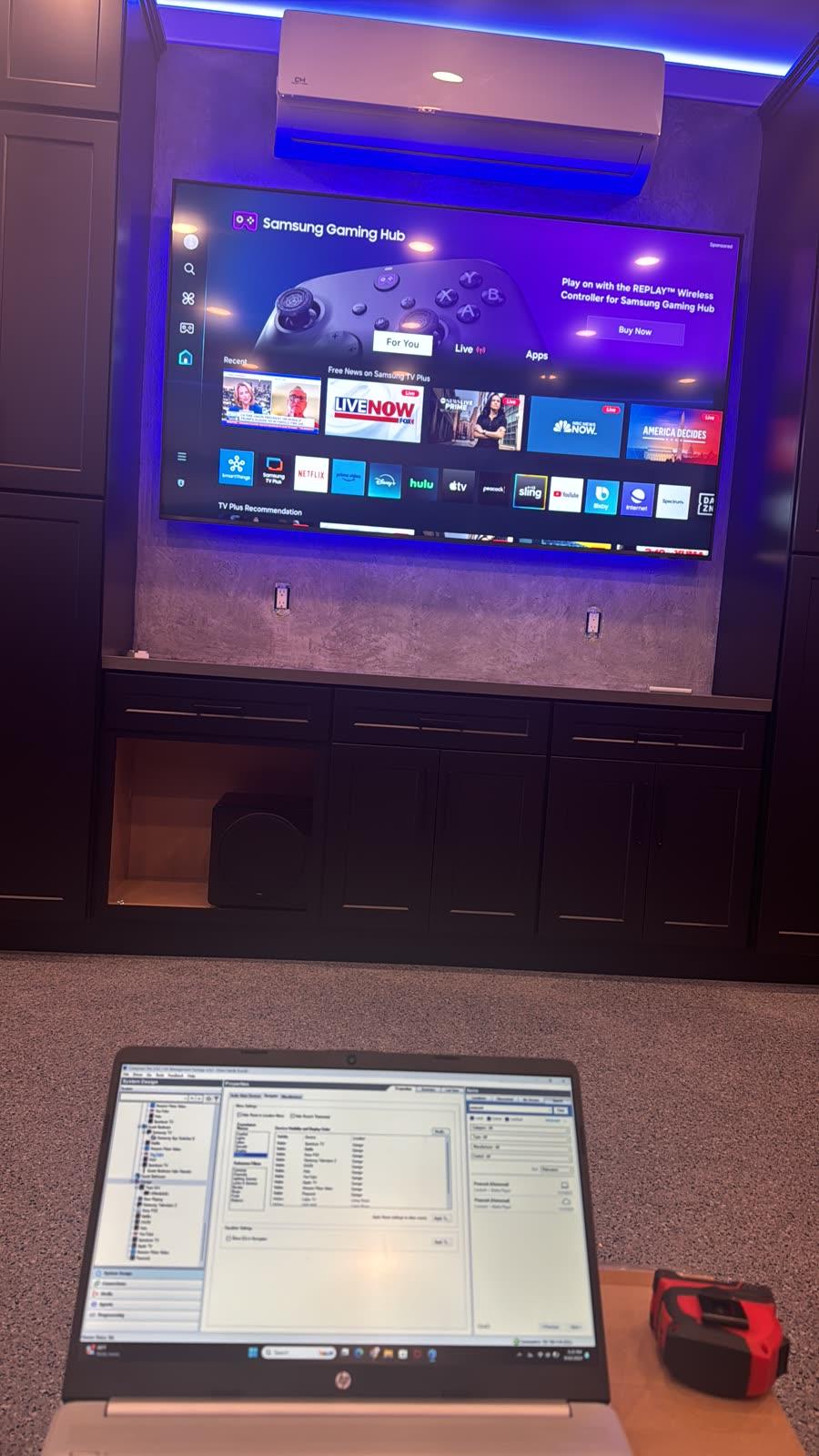
In a courtyard unit or a stucco box, the theater is the living room. That means a TV in a built-in, speakers on walls you don't share and bass kept in check for the people next door.
In West Hollywood →Security Camera Installation
On a small lot or a shared courtyard, a camera can see more of the neighbors than of you. We aim narrow and mask what isn't yours.
In West Hollywood →Also available in West Hollywood
From a Yelp reviewer in West Hollywood
“Tony came to the house and resolved an issue with my thermostat, and did it free of charge. Doesn't get better than that. 5 stars!”
Common questions
West Hollywood questions: permits, landmarks and shared walls
- West Hollywood isn't Los Angeles. Who handles permits and alarms here?
- The City does. West Hollywood has been its own city since November 29, 1984. Its Building and Safety Division is the building department here, not LADBS. Law enforcement is the Los Angeles County Sheriff's West Hollywood Station, and the City requires residents and businesses with an alarm system to register for an alarm permit. Permits are between you and the City.
- My building is in the Courtyard Thematic District. Can I still add a system?
- The City adopted its preservation ordinance in 1989 and has designated more than 90 cultural resources and six districts, including the Courtyard Thematic District in 1992. The City has a certificate of appropriateness application for work on designated buildings. Most of what we install is inside your unit: a wired network, wireless lighting control, a TV, speakers. Whether any of it needs review, inside or out, is between the owner or association and the City.
- Can you wire a West Hollywood condo without opening the common walls?
- Usually, yes. Wireless Lutron dimmers reuse the wiring in the wall. Access points and a TV can be wired inside your own unit. Speakers go in walls that are yours alone, or on shelves. Anything that crosses a common wall, a slab or a hallway is your association's decision, so get its rules before we draw the system.
Near West Hollywood
Neighboring areas we serve
Ready when you are